The money conversation nobody had with you
Somewhere between secondary school and your first salary, someone should have sat you down and explained how money actually works. Not the basics- save, don't spend more than you earn but the real stuff. The part where your money makes more money. The part where you stop trading time for income and start building something that compounds.
Most of us never got that conversation.
Instead, we got two instructions: keep money in a bank, and buy land when you can. Anything beyond that felt like territory reserved for rich uncles, finance bros, or people with suspiciously confident energy at family gatherings. Mutual funds? Nobody explained them. So most people nodded politely and moved on, leaving real returns on the table because the concept was never made plain.
That gap is expensive. Money sitting in a regular savings account in 2026 is shrinking in real terms. Inflation does not pause while you figure things out. Every month you wait to move beyond a savings account is a month the purchasing power of your money quietly erodes.
Here's what's worth knowing: mutual funds have been operating in Nigeria since the 1990s. They are not new, not complicated, and not reserved for people with investment portfolios thicker than a textbook. They have simply been under-explained, and that's exactly what this article fixes.
By the time you finish reading, you will know what mutual funds are, which type fits where you are right now, how returns actually work, and what the first steps look like. Not in theory. In practice.
No jargon. No condescension. Just the honest explanation someone should have given you a while ago.
So what is a mutual fund, actually?
Let's start from zero, because the concept is simpler than its reputation suggests.
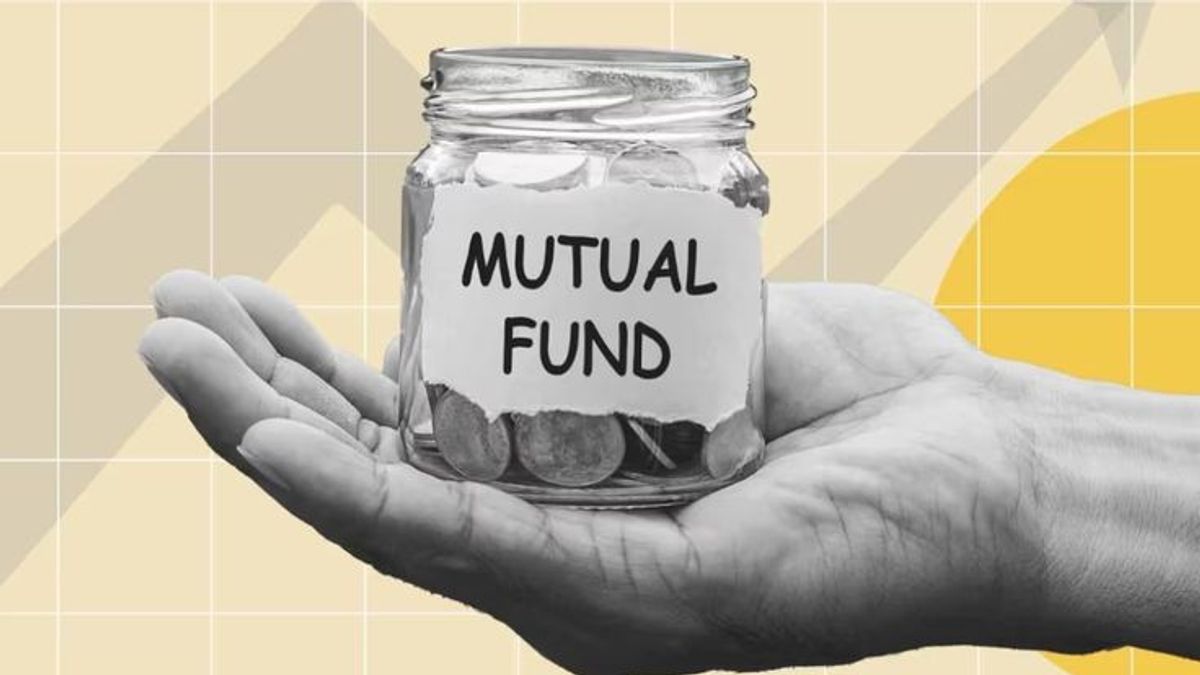
A mutual fund is a pool. Thousands of investors contribute money into a single fund. A professional fund manager takes that pooled money and invests it in government securities, corporate bonds, stocks, or a combination on behalf of everyone in the pool. Whatever returns the investments generate are shared among investors, proportional to how much each person put in.
If you've ever been part of a contributions group- ajo, esusu, adashe- you already understand the structure. People pool resources. The collective achieves something none of them could have done alone. Mutual funds work on the same logic, except instead of rotating lump sums, everyone earns from how the pool is invested.
The key difference between a mutual fund and just buying stocks or bonds yourself is this: you don't have to pick anything. You don't need to know which company is reporting strong earnings this quarter or which bond offers the best yield relative to duration. The fund manager handles that. Your job is to choose the right type of fund for your goal and contribute consistently. That's it.
Mutual funds in Nigeria are regulated by the Securities and Exchange Commission (SEC). They are formal, licensed investment vehicles- not schemes, not side hustles, not anything that requires you to refer three people to make returns. Every fund manager operating in Nigeria must be registered and approved. If a fund is not on the SEC's register, it is not a mutual fund- it's something else, and that something else is your cue to walk away.
A few terms you'll keep seeing:
NAV (Net Asset Value): The price of one unit of a fund on any given day. When a fund performs well, its NAV rises. When the market is rough, it falls. This is how you track performance.
Units: What you actually buy when you invest in a mutual fund. If a fund's NAV is ₦100 and you invest ₦10,000, you own 100 units. When the NAV grows to ₦120, your 100 units are worth ₦12,000.
Fund Manager: The licensed professional or firm managing the pool. Their job is to allocate the fund's capital in ways that generate returns for investors. In Nigeria, names like ARM, Stanbic IBTC Asset Management, and Coronation Asset Management run some of the most established funds.
That's the foundation. Everything else builds on this.
The five types of mutual funds in Nigeria and who each one is for
Not all mutual funds work the same way, because not all investors have the same goals or timelines. The right fund for someone saving for a house deposit in two years looks very different from the right fund for someone building retirement wealth over twenty years. Here's how the main categories break down.
Money Market Funds
Money market funds invest in short-term, low-risk instruments: government Treasury Bills, Central Bank of Nigeria (CBN) securities, and high-grade commercial paper. The returns are modest but stable, and your capital is as close to protected as you can get in an investment (not a guarantee, but as close as it gets in this asset class).
Who this is for: Anyone new to investing who wants to start somewhere safe. Anyone building an emergency fund. Anyone with a financial goal in the next 6 to 12 months. Money market funds are also an excellent alternative to leaving money in a savings account and watching it underperform inflation.
Fixed Income Funds
These funds invest in longer-duration debt instruments: FGN Bonds, state government bonds, and corporate fixed income. Because the investment horizon is longer and the instruments are slightly less liquid, the potential returns are higher than those of money market funds, but so is the sensitivity to interest rate movements.
Who this is for: Investors with a one-to-three-year horizon who want something better than a savings account without the volatility of equities. If you're building toward a specific goal- a car, a business capital injection, a wedding- and you have time to let the fund work, this is worth considering.
Equity Market
Equity Market invests in shares of companies listed on the Nigerian Exchange (NGX), including MTN Nigeria, Dangote Cement, Zenith Bank, and GTCO. When those companies grow in value, your fund grows with them. When the market pulls back, the fund pulls back too.
Equity funds offer the highest potential returns of any mutual fund category over the long term. They also carry the most short-term volatility. A fund can be up 35% in a strong year and down 18% in a correction, and both of those things can happen to the same fund in consecutive years.
Who this is for: Investors with a three-to-five-year minimum horizon who understand that short-term dips are part of the deal. If your goal is far enough away that you don't need the money any time soon, equity funds tend to reward patience more generously than any other fund type.
Mixed Funds
A balanced fund does what the name says: it holds a mix of equities and fixed income within the same fund. The fund manager handles the allocation, adjusting between the two asset classes based on market conditions. You get growth potential from the equity portion and some stability from the fixed income portion.
Who this is for: Investors who want meaningful returns but aren't ready to go all-in on equities. If equity funds feel like too much volatility for you right now but money market returns feel like too little ambition, a balanced fund is the honest middle ground. It won't outperform a pure equity fund in a bull market, but it won't drop as sharply when things turn.
Dollar Funds
These funds are denominated in US dollars and invest in dollar-denominated assets, such as Eurobonds issued by the Nigerian government, African sovereigns, and select corporates. Your investment goes in naira, converts to dollars, earns in dollars, and converts back when you withdraw.
If you watched the naira's trajectory between 2023 and 2024 and it made you feel something- concern, frustration, a strong desire to diversify- this fund type was built for exactly that feeling.
Who this is for: Investors who want to hedge against naira depreciation. Anyone with future financial obligations in foreign currency: international school fees, relocation costs, dollar-denominated savings goals. Anyone who has decided that holding everything in naira is a risk they'd rather reduce.
How returns actually work (no false promises)
This section exists because mutual fund marketing can sometimes leave people with expectations that don't match reality. Let's fix that.
Mutual fund returns are not fixed. Unlike a Treasury Bill, which tells you upfront "you'll earn 22% per annum over 91 days," a mutual fund's return varies with how its underlying assets perform. You are not buying a rate. You are buying a managed strategy.
Returns reach you in two ways:
Income distributions: When the assets inside the fund generate income/interest from bonds and dividends from equities, the fund distributes that income to unit holders, either directly or by reinvesting it to grow your NAV.
Capital appreciation: When the NAV of your units increases over time because the assets in the fund have grown in value. If you bought units at ₦100 NAV and the NAV is now ₦130, you have made a 30% capital gain on those units.
What you can reasonably expect, based on historical performance in Nigeria:
Money market funds have generally tracked short-term interest rates. In high-rate environments like 2024–2025, returns in this category were notably strong. Bond funds vary with the broader interest rate and yield environment. Equity funds are the most volatile category, with annual returns that can vary widely year to year, which is why the holding period matters so much.
Past performance is not a guarantee of future returns. That is not a legal disclaimer buried in the fine print; it is genuinely important to understand before you invest. A fund that returned 28% last year may return 15% this year. What you are investing in is a team, a strategy, and a market, not a fixed rate.
The more useful comparison is not "what will this fund return?" but "what is this fund returning compared to inflation, and compared to the alternative of doing nothing?" On that basis, a well-chosen mutual fund in the right category almost always makes the case for itself.
How to choose the right fund for you
With five categories and dozens of funds across the Nigerian market, the choice can feel overwhelming if you approach it without a framework. Here is one that works.
Start with your timeline. This is the single most important variable. Money you might need in six months belongs in a money market fund, full stop. Money you are building toward a goal five years away can sit in an equity fund and ride out any volatility between now and then. Timeline determines appropriate risk tolerance more reliably than personality, more reliably than how you felt about the stock market last month. Before you look at a single fund, know when you will need the money.
Look at the fund manager's track record. Not just last year's return. Consistency over three to five years tells you far more about a fund manager's competence than a single standout year. SEC-licensed fund managers are required to disclose performance data. Read it.
Understand the fees. Fund managers charge a management fee, typically between 1% and 2% per annum, deducted from the fund's assets. This means it is deducted from your returns before they reach you. On a fund returning 14%, a 2% management fee leaves you with 12%. That gap compounds over years. It is worth asking about before you invest, not after.
Check the minimum investment. Entry points vary significantly across funds and platforms. Some funds start at ₦5,000. Others require ₦50,000 or more. Know your entry point and don't talk yourself out of starting just because you can't begin at the level you eventually want to reach.
You don't have to pick just one. Splitting across two funds- a money market fund for your emergency buffer and a balanced fund for a medium-term goal- is a legitimate strategy. It's not over-complication. It's allocating money to the vehicle best suited for what each portion of that money is supposed to do.
Getting started: what the actual process looks like
Knowing how mutual funds work is one thing. Starting is another. Here's what the process actually looks like, in plain steps.
Step 1: Define your goal and timeline. Are you building an emergency fund? Saving for a house deposit in three years? Investing for retirement? Your goal and timeline determine everything that comes next, including which fund type you should consider.
Step 2: Choose a fund. In Nigeria, you can invest directly through asset management companies such as ARM, Stanbic IBTC Asset Management, Coronation, and others. You can also invest through platforms like Akiba that simplify access, especially if you're starting and don't want to navigate multiple fund manager websites to compare options.
Step 3: Complete your KYC. Every mutual fund in Nigeria requires Know Your Customer verification before you can invest. You'll need your BVN, a valid government-issued ID, and a linked bank account. This is regulatory compliance, not a red flag. If a platform that calls itself a mutual fund doesn't require this, that is a red flag.
Step 4: Make your first contribution. Start with what you have. ₦10,000 in a money market fund today is worth more in compounded returns and in the psychological weight of having started than ₦100,000 you are waiting to have before you begin. The fund doesn't know or care how much you start with. The math doesn't either.
Step 5: Set a recurring contribution. The difference between people who build real wealth through mutual funds and people who don't is rarely intelligence or income level. It is usually consistency. Setting a recurring monthly contribution is the standard; automate it. When the transfer happens before you have a chance to spend that money elsewhere, the decision is already made. That's the system.
The mistakes first-time investors make (so you don't have to)
Learning from your own mistakes is fine. Learning from other people's is faster. These are the patterns that most often appear among first-time mutual fund investors in Nigeria.
Chasing last year's top performer. Fund performance rotates. A fund that led the market last year may have done so because of a specific set of conditions- an interest rate environment, a sector rally, a currency move- that no longer exist. Investing in last year's best-performing fund because it was last year's best-performing fund is one of the most common ways to get mediocre returns while feeling like you made a smart choice.
Withdrawing when the NAV ( Net Asset Value) dips. If you are in an equity fund and the market corrects, your NAV will fall. This is not a malfunction. This is how equity markets work. The investors who exit during those dips lock in their losses and miss the recovery. If your goal is five years away, a three-month dip in NAV is noise- not a signal to exit.
Treating a mutual fund like a savings account. You can withdraw from most mutual funds, but that's not what they're designed for. Compound interest works best when capital is left to grow. Frequent withdrawals disrupt the trajectory. If you need a vehicle you can dip in and out of freely, that is what a money market fund or a high-yield savings account is for.
Ignoring the fees. A 2% annual management fee on a fund returning 14% means your effective net return is closer to 12%. Compounded over ten years, that gap is significant. Ask about fees before you commit. It does not mean paying the lowest fee possible; it means understanding what you are paying and whether what you are getting is worth it.
Waiting for the right time to invest. There is no moment when everything aligns perfectly- no ideal interest rate environment, no perfectly calm market, no salary figure that finally feels big enough to start. The best time to start investing in a mutual fund was some years ago. The second-best time is now.
One last thing
Mutual funds are not complicated. They feel complicated because nobody explained them properly.
Now you know what a mutual fund is. You know the five types available in Nigeria and which goal each one serves. You know how returns work, what fees to look out for, and what the first steps actually look like. You know the mistakes to avoid. There is nothing left standing between you and starting except the decision to start.
Open an Akiba account, pick the fund that matches your goal and timeline, and make one contribution- whatever amount you can begin with. The most important move is the first one.
Your future self will recognise this moment.
Join the Akiba Tribe