
Scroll far enough on Nigerian Twitter, and you'll find it: a thread with 40,000 likes promising "7 passive income streams that pay you while you sleep." A screenshot of alerts. A countdown to a "launch." By the third tweet, someone's asking you to pay for the "blueprint."
If you had ₦5,000 to your name in 2016, you already know a version of this story. MMM promised the same thing in different clothes: pay in, refer your guy, watch your money grow by 30% a month. It worked, right up until December 13, 2016, when it didn't. An estimated 3 million Nigerians had signed up. Depending on which regulator's numbers you trust, somewhere between ₦12 billion and ₦18 billion disappeared, and it wasn't the last time this happened. Nine years later, in April 2025, a platform called CBEX ran the same play with better branding- an app, an "AI trading" pitch, daily "signals" to copy and paste- before it froze withdrawals overnight, and the EFCC moved in.
So if the phrase passive income makes you flinch a little, that's not paranoia. That's pattern recognition. But here's what your older sibling needs you to know: the phrase isn't the problem. What's been sold to you under that name is.
Let's Reset the Definition First
Half the confusion out there comes from mixing up "passive" with "free."
Real passive income means the hard part happens once you save the capital, do a bit of homework, make a decision, and after that, the reward keeps showing up with little to no ongoing effort. It's front-loaded work or front-loaded money, followed by a long, unglamorous stretch of not much happening except your money quietly doing its job.
It is rarely: sign up today, refer three people, and watch alerts flood in by Friday. If a pitch sounds like that, hold that thought. We're getting there.
"Success is the sum of small efforts, repeated day in and day out."
— Robert Collier
What's Real
None of this is secret information. It's just less exciting than a promise of ₦2 million by December, which is exactly why it works.
Dividend-paying stocks on the NGX. When you own shares in a company and that company turns a profit, some of it can be paid back to shareholders as a dividend, usually once or twice a year.
You don't have to do anything except own the stock and wait for the pay out to be declared. Nigerian banks have built real reputations around this. GTCO and Zenith Bank regularly appear among the Exchange's most consistent dividend payers, and names like Dangote Cement and MTN Nigeria also pay out.
However, their yields tend to sit lower and shift more from year to year. None of this is guaranteed the way a Ponzi promise is "guaranteed"; a weak year can mean a smaller dividend, or none. So treat this as a "do a little homework first" category, not a "close your eyes and pick one" category.
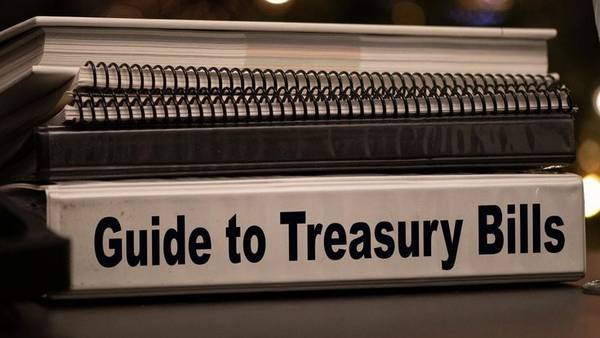
T-Bills and FGN Bonds. Treasury Bills and Federal Government of Nigeria Bonds are, at their core, you lending money to the government for a fixed period in exchange for interest.
This is about as close to "set it and forget it" as passive income gets in Nigeria; you commit an amount, wait out the tenor, and collect your return, with nothing to check daily. Rates move with every auction and have recently clustered in the mid-teens depending on tenor, so what you'd earn today won't be locked in forever. But the mechanism itself is genuinely, boringly passive.
Money market and mutual funds. This is the "let someone else do the picking" option. A licensed fund manager pools money from lots of investors and spreads it across T-Bills, commercial paper, and other low-risk instruments.
You buy in, they manage it, and your balance grows without you ever having to open a trading app. It's one of the most beginner-friendly entries on this list, because there's genuinely no research required beyond choosing a reputable fund.
REITs. Most people hear "real estate" and think of money they don't have- the tens of millions for land in a decent part of Lagos. Real Estate Investment Trusts get around that.
They let you buy into a portfolio of income-generating property through the stock exchange, in units you can actually afford, and earn a share of the rental income without ever meeting a tenant or fixing a leaking roof. UPDC REIT is the one you're most likely to run into on the NGX.
Rental income, if you already have property. This one's real, but it doesn't deserve the "passive" label quite as cleanly as people assume. The cheque might land monthly or yearly, but agents, repairs, and problem tenants are still somebody's problem- yours, or your agent's, at a cost. Real estate is a legitimate income stream. It is not a hands-off one.
Dollar-denominated assets. With how much the naira has moved over the last few years, part of building real passive income now means holding some of it outside naira- Eurobonds, dollar mutual funds, or domiciliary fixed deposits. This isn't about abandoning the naira. It's about not having 100% of your future sitting in a currency that can lose a chunk of its value while you're asleep.
What's Not
Here's the checklist your older sibling wishes someone had handed them in 2016.
Anything that guarantees a fixed, high return. Real investments carry risk- that's not a flaw; that's how markets work. A stock's price can drop. A fund's return can dip in a bad quarter. So when a platform promises 15% a week or 100% in 30 days with "zero risk," ask the obvious question: if that return were real, why would they need your ₦20,000? Banks and hedge funds would be lining up to lend them money instead.
CBEX ran exactly this pitch in 2025: an "AI-powered" trading platform promising to double investors' money in a month. It arrived in Nigeria in mid-2024 and collapsed less than a year later, freezing withdrawals overnight and drawing in the EFCC. The technology story changes every few years. The math never adds up.
Anything that pays you for recruiting. This is the oldest trick wearing the newest branding. MMM ran on it. So did the wave of copycats that followed: Loom, Racksterli, and others most Nigerians have at least heard of by now. If your main source of income is bringing in someone else's money rather than an actual asset or business generating returns, it isn't passive income. It's a queue, and someone always ends up holding the empty end
Forex or crypto "signal" groups that trade for you. There's a real difference between learning to trade, which takes genuine, active skill. It carries genuine risk, and you're paying a stranger in a Telegram or WhatsApp group to trade your money for a promised fixed return.
MBA Forex ran this exact model between 2018 and 2021, drawing in investors with a promised 15% return before folding, taking an estimated ₦213 billion with it. If you can't see the actual trades, can't verify a track record, and can't withdraw on your own terms, you don't have an investment. You have a hope with a dashboard attached.
"Passive" businesses that are actually full-time jobs. Drop shipping courses, importation "systems," reselling networks- some of these can genuinely make money. But they're businesses, not passive income, and calling them passive is usually the first sign that whoever's selling the course either doesn't understand the word or is hoping you won't ask too many questions. Sourcing, customer service, and marketing don't run themselves, especially in year one.
Here's a quick gut check for telling the two apart in real time: legitimate options never need to convince you they're not a scam. They just quietly do their work. Think of it like Lagos traffic: the okada weaving through gridlock might get you there faster today, but he's also the one most likely to end up in a ditch. The danfo in the slow lane is boring. It also actually gets there.
How to Start With Whatever You Have
The biggest myth keeping people out of passive income isn't a scam. It's the idea that you need millions before you're "allowed" to start.
You don't.
Suppose you're starting from close to nothing. Be honest with yourself for a second: is it really nothing, or is it ₦5,000 that keeps finding its way to Lifestyle, data, and small craving contributions before it reaches anywhere else? No judgment, that's most of us. But if you can find ₦5,000 a month for that, you can find it for a money market fund. When done consistently, it does two things at once: it builds the muscle of paying yourself first, and it earns something instead of sitting idle.
This step won't get you 40,000 likes on Twitter, because "save a small amount consistently" isn't a thread anyone screenshots. It's also the one that actually works.
Suppose you have a small but real amount saved. This is where T-Bills, money market funds, and your first dividend stock come in. You don't need a large stake in GTCO or Zenith Bank on day one. You need to buy what you can afford, understand what you own, and let it sit.
Suppose you have more to work with. Spread it across a few of the categories above instead of putting it all in one place- some naira, some dollar-denominated, some in funds, some in individual stocks. This isn't about chasing the single highest return. It's about not getting wiped out if one bet underperforms.
Whatever level you're starting from, reinvest what you earn. This is the actual secret behind everyone you've seen with real passive income- not a hidden platform, just interest and dividends going back in instead of coming out, quietly compounding. At the same time, you're busy doing other things. And give it time. With inflation still sitting in the mid-teens, even solid options like T-Bills won't make you rich overnight; right now, they're doing the job of protecting and growing what you have while you build other income on top of it. Real passive income in Nigeria is a multi-year habit, not a December miracle.
Where Akiba Fits In
You don't need a trading terminal or a finance degree to take the first step. You need somewhere to put your first ₦5,000 or ₦50,000 where it can actually start working, instead of waiting for "enough" because for most people, that day never arrives on its own.
That's where Akiba comes in- not as the whole strategy, but as the easiest place to start the habit this entire article is really about. Save consistently, watch it grow, and build toward the more advanced movesT-Bills, dividend stocks, mutual funds- once you're ready for them.
Start Small → Start Saving.
A quick note: dividend yields, T-Bill rates, and inflation figures shift with every earnings season and every CBN auction. Treat the ranges in this piece as a snapshot, not gospel, and check current numbers before committing money anywhere. This article is educational, not personalised financial advice.
Passive income in Nigeria is real. It's just quieter, slower, and far less exciting than the version being sold to you on your timeline. The people actually building it aren't the ones posting screenshots of alerts; they're the ones who started small, stayed boring, and let time do what time does. You don't need millions to begin. You need to start.