Your Money Is Losing Value While You Sleep (And No One Told You)
You didn't lose your job. You didn't make a bad investment. You didn't even spend recklessly. And yet, somehow, money is never enough than it was two years ago.
Let's talk about why and what to actually do about it.
Section 1: The Inflation Conversation Nigeria Should Know
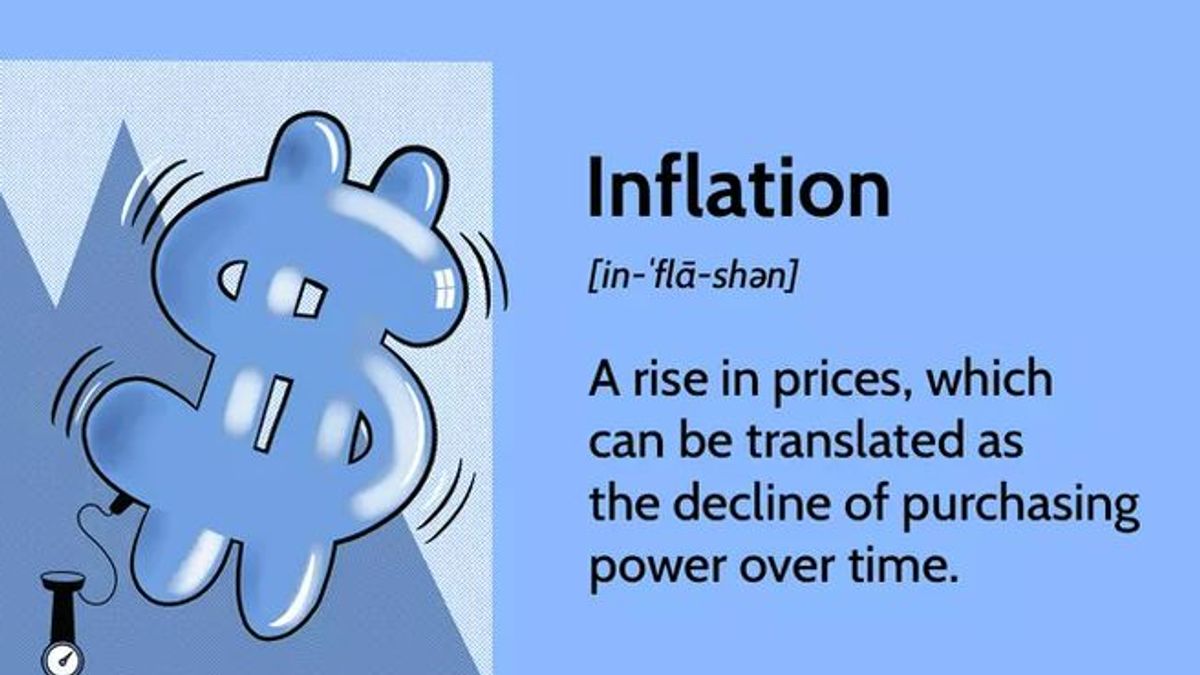
Nigerian inflation has spent the last few years swinging between 15% and 33%, depending on the year and who's measuring. Meanwhile, the average savings account is still paying out a humble 1–5% interest. That gap between what prices are doing and what your bank is giving you is your silent loss per year. Nobody sends you an alert for it. It just happens.
This isn't a "finance bro" problem you can ignore because you're not into stocks or crypto. It affects every single Nigerian with money sitting in a traditional current or savings account, doing absolutely nothing.
Don't believe the numbers? Run the jollof rice test. Price the same plate of jollof at the same buka in 2022 versus today. That price jump isn't just "things don craze." That's inflation, made visible, one plate at a time.
Section 2: What "Purchasing Power Loss" Actually Means (No Economics Degree Required)
Here's the part school never properly explained.
Say you have ₦1,000,000 today, and inflation is running at 25%. In 12 months, you'd need ₦1,250,000 just to buy the same things you can buy now.
If that ₦1,000,000 sat in an account earning 3% interest, you'd have ₦1,030,000 by year-end. Your balance went up. Your purchasing power decreased by roughly ₦220,000. You are technically richer in naira and poorer in reality, at the same time.
This is the part that messes with people's heads: you can have more money and still afford less. It's why salary increments that look generous on paper often don't feel like anything when the rent, the data subscription, and the cost of beans all moved faster than your raise did. Your income number stayed the same or even grew; your real income quietly shrank.
"Rule No.1: Never lose money. Rule No.2: Never forget Rule No.1."
— Warren Buffett
Section 3: The Worst Things You Can Do With Savings in a High-Inflation Environment
Some habits feel "safe" but are actually inflation's favourite targets.
- Leaving money in a zero-interest current account. This is the most common mistake, and the most avoidable one.
- Waiting until you "have enough" to start investing. Inflation doesn't wait for you to feel ready. Every month of delay is a month of value quietly leaking out.
- Mistaking lifestyle spending for investing. Splurging on designer items or upgrading your wardrobe for every weekend outing isn't "diversifying into appreciating assets"; it's spending that inflates with the currency, not against it.
- Trusting informal, unregulated savings schemes promising suspiciously high returns. Often, this isn't an inflation hedge; it's a scam wearing an inflation-anxiety costume.
Section 4: What Actually Works Your Inflation Cheat Codes
The good news: there are real, accessible tools built for exactly this problem.
High-yield savings. Platforms like Akiba offer significantly higher interest than a traditional bank savings account. Think of this as your minimum viable inflation defence: the first, easiest move almost anyone can make today.
T-Bills and FGN Bonds. Government-backed securities that often offer competitive, fixed returns. Relatively low-risk, predictable, and well-suited to medium-term savings goals.
NGX stocks. Over a 5–10 year horizon, Nigerian equities have historically outpaced inflation. Think of names like MTN Nigeria, Dangote Cement, Zenith Bank, or GTCO; this route asks for research and patience, but the long game has historically paid off.
Mutual funds. Pooled, professionally managed, SEC-regulated investments with a much lower entry barrier than picking individual stocks yourself. A solid middle ground if you want market exposure without having to do all the homework.
Dollar-denominated assets. For Nigerians with access to USD savings or investment products, this adds a layer of protection against naira devaluation, in addition to straightforward inflation.
Section 5: Your Inflation Strategy
A high-yield savings platform isn't a silver bullet against inflation; nothing is. But it is, by far, the most frictionless starting point for most Nigerians who want to stop losing quietly.
Moving idle cash from a current account into a savings plan immediately puts that money to work earning more interest. No certifications, no market knowledge, no spreadsheet required.
Use savings platforms to build your capital base first, then deploy it into T-Bills, NGX stocks, or mutual funds as you get more comfortable. Think of it as the staging ground, the place your money lives while it's getting ready for its next move, not the final destination.
There's also a quieter benefit: the discipline of automated saving. When the transfer happens before you even think about it, it protects the money from a much more familiar inflation accelerant: your own spending impulses.
One habit worth building: every month, move at least the same percentage as the expected inflation rate into interest-bearing savings. Don't treat beating inflation as an aspiration for "when things settle down." Make it the baseline.
Your naira doesn't have to lose quietly.
Move your savings somewhere they work back and start earning on every naira.
Beat Inflation → Start Saving